
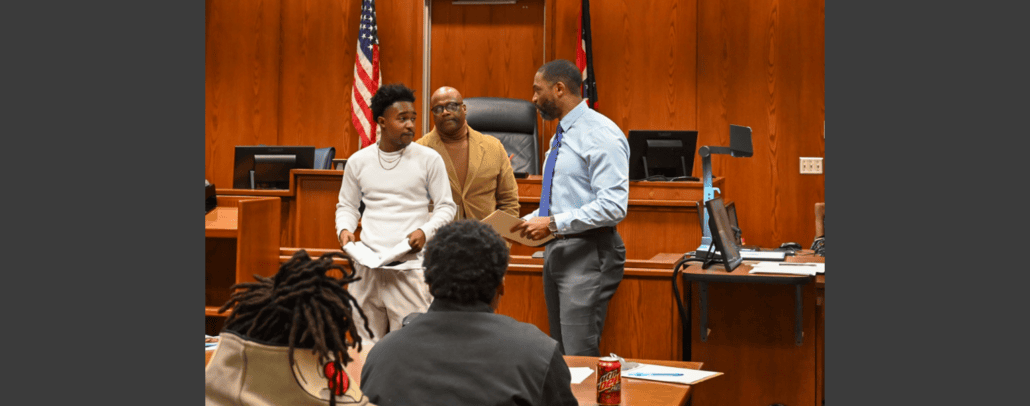
Kushinda Court Receives State Certification
July 15, 2026
The Kushinda Court of the Montgomery County Common Pleas Court – General Division has earned final certification from the Supreme Court of Ohio Commission on Specialized Dockets.
To receive the certification, a local court submits a detailed application, undergoes a visit and report on its practices, and provides specific program materials in response to certification standards that went into effect in January 2014.
Ohio Supreme Court Chief Justice Sharon L. Kennedy congratulated Judge Gerald Parker and the Montgomery County Common Pleas Court for meeting the standards required for final certification.
“Specialized dockets offer an alternative to incarceration, and reflect a community’s belief in second chances,” said Chief Justice Kennedy. “They focus on people who are willing to work to overcome the personal challenges that led to their involvement in the justice system. The court and community partners work together to supervise treatment, training, and support, providing local solutions to local problems under leadership of the local court.”
Courts with specialized dockets address specific treatment needs of people who are charged with a variety of offenses using recommended best-practices that focus on offender accountability, behavior change and recovery. There are 250 certified dockets in Ohio courts with expertise in areas such as drug and alcohol addiction, mental health, domestic violence, human trafficking, and veterans issues.
The certification standards provide a minimum level of uniform practices for specialized dockets throughout Ohio and allow local courts to innovate and tailor programs to meet their community’s needs and resources.
“True justice doesn’t just punish; true justice restores,” said Judge Parker, “’The term ‘Kushinda,’ means to conquer, to overcome, to defeat in Swahili. Research is clear on the value of specialized dockets and this particular court serves as a substance use docket with a focus on underserved, undereducated, and under-resourced communities often riddled with gun violence.”
The certification requirements include establishing eligibility requirements, evaluating effectiveness of the specialized docket, and assembling a treatment team to implement daily operations of the specialized docket. The team is headed by the specialized docket judge and can include licensed treatment providers, law enforcement, court personnel, and more.
The Commission on Specialized Dockets has 22 members to advise the Supreme Court and its staff regarding the statewide rules and uniform standards concerning specialized dockets in Ohio courts; the development and delivery of specialized docket services to Ohio courts; and the creation of training programs for judges and court personnel. The commission makes all decisions regarding final certification.


